Location: Brussels, Belgium – Avenue des Arts 1–2, 9th Floor
Date(s): 15 January 2026
Hosting partner organization: CAMARABELUX – The Official Spanish Chamber of Commerce in Belgium and Luxembourg
Circular Innovation for a Competitive Textile Sector
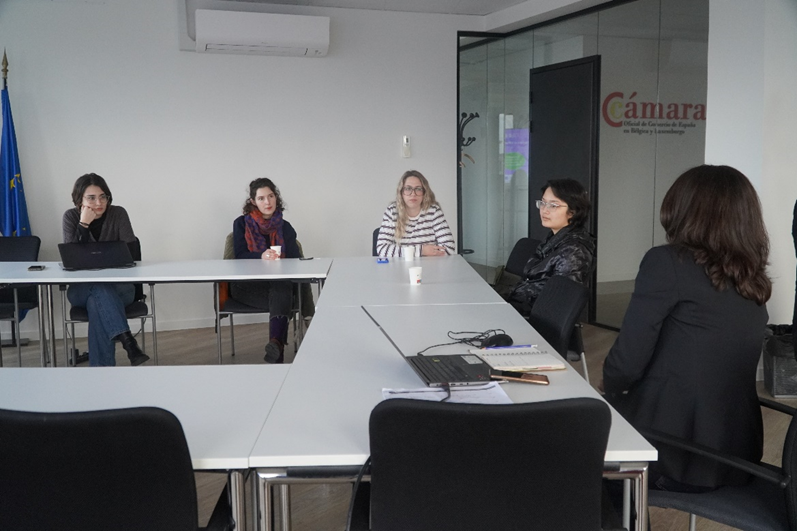
The event gathered women entrepreneurs and professionals connected to the textile ecosystem to promote innovation, sustainability, and leadership within the sector.The half-day programme combined a policy-oriented breakfast debate with a practical ideathon workshop. The opening session addressed European competitiveness and sustainability within the Clean Industrial Pact framework. Elisa Roller, Director for Prosperity and Competitiveness at the Secretariat-General of the European Commission, provided insights into industrial transition, decarbonisation challenges, and the need to balance regulatory ambition with economic viability. The discussion highlighted the impact of energy prices, supply chain disruptions, and evolving EU policies on the textile value chain.
The second part of the event focused on the W4TEX project and its digital learning platform. Participants were introduced to training modules covering sustainable value chains, environmental impacts of raw materials, eco-design practices, and responsible consumption. This knowledge framework supported the ideation phase.
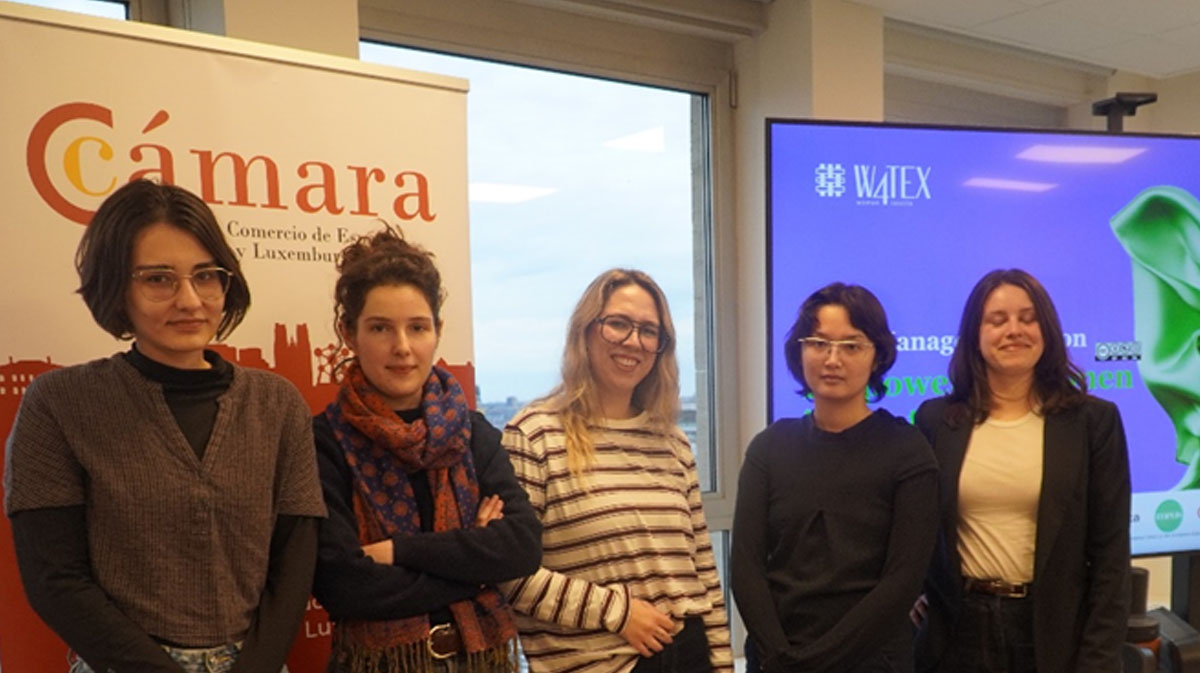
Participants from diverse professional backgrounds—entrepreneurship, finance, consultancy, and innovation—worked in multidisciplinary teams to address key challenges: sustainable fashion models, circular economy integration, competitiveness during industrial transition, and the environmental and social impact of fast fashion. Teams developed structured proposals and presented them for evaluation based on feasibility, innovation, sustainability impact, and scalability.
The winning concept, “From Waste to Worth”, proposed a circular business model that transforms underutilised materials into high-value, traceable products. The project stood out for its economic feasibility, clear market positioning, and scalable operational design. Importantly, sustainability was embedded as a core value proposition rather than a compliance measure.
The ideathon strengthened collaboration among women across the textile value chain and reinforced the relevance of structured training and peer exchange. Participants developed practical skills in circular business modelling, strategic sustainability integration, and competitive positioning.